


Mahogany House
Location
Bangkok, Thailand
Built Size
570 sq.m.
Land Area
120 sq.w.
Scope
Full ; Architecture, Interior, Lighting, and Engineering
Phase
Under Construction
A mahogany tree planted by the owner's father over 30 years ago
still stands on a 120-square-wah plot in Bangkok, becoming the starting point of Mahogany House, a 570-square-metre family residence. Rather than treating the tree as a constraint, we allowed it to guide the architecture, shaping a home that accommodates the family's changing needs while preserving a connection to the landscape that has been part of their lives for decades.

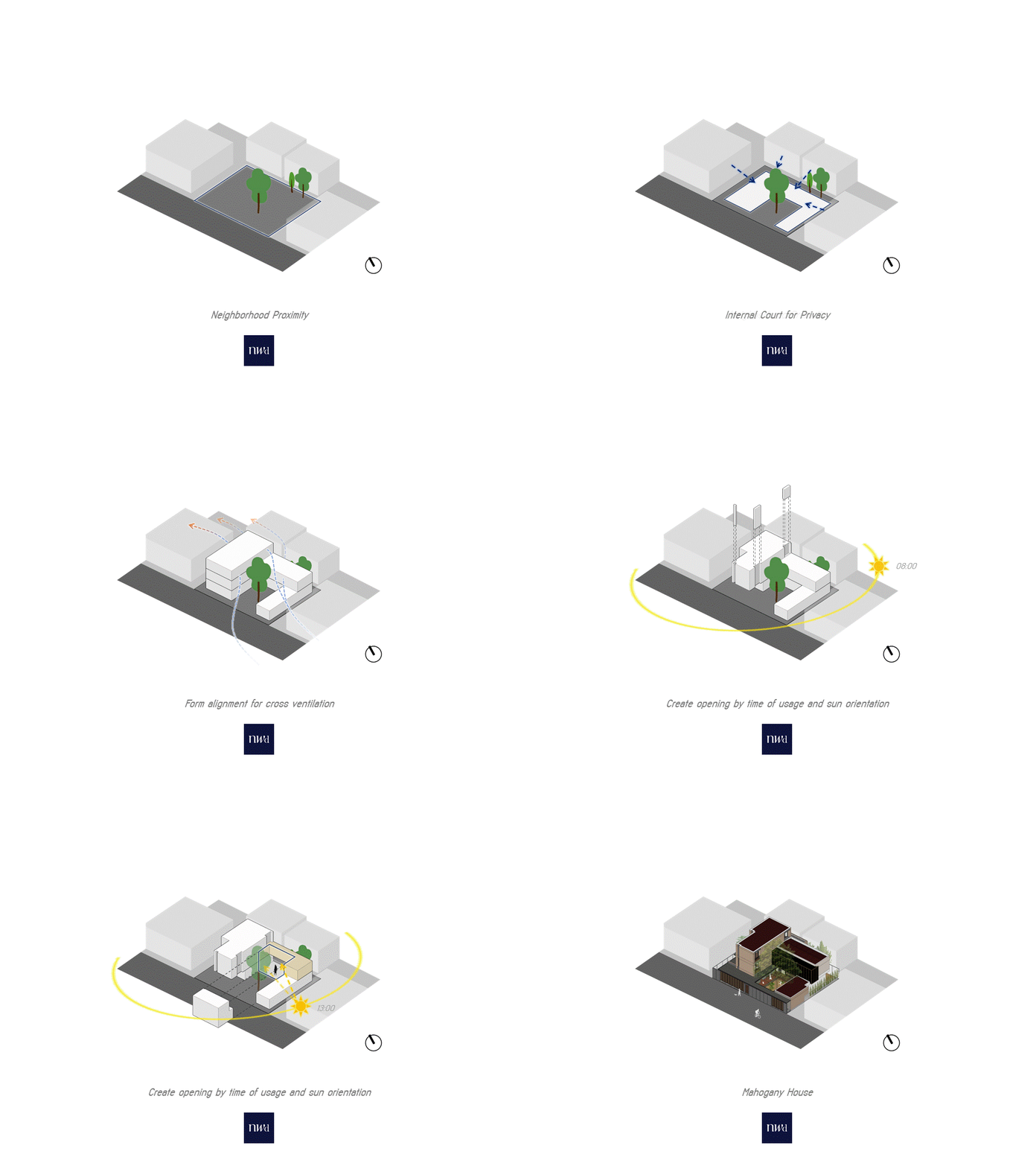
The house is arranged in a U-shaped configuration around the Mahogany Court, the central courtyard. To accommodate the living spaces without overwhelming the site, the building steps from a single-storey southern wing to three storeys on the west. This allows natural airflow through the courtyard, while the western volume provides shade from the afternoon sun. Rooms and openings respond to the sun's orientation and daily patterns of use, allowing daylight to shape the atmosphere of each space at the right time of day.
More than a visual centerpiece, Mahogany Court becomes part of everyday family life. Beneath the tree's canopy, a shaded outdoor area provides a place for children to play, directly connected to the open-plan living and dining spaces.


Inside, a double-height volume and upper-level walkways establish visual connections between floors, with reading corners and seating areas overlooking the greenery. The tree is felt from many levels of the house, not only from the courtyard.


The architectural language remains simple and restrained, with an emphasis on natural textures. Textured exterior surfaces and board-formed concrete echo the character of the tree's bark, while the interiors adopt a quieter palette of white walls and dark timber. These materials form a backdrop for changing daylight and branch shadows, so the atmosphere shifts through the day.


Preserving the mahogany tree was more than retaining an existing element of the site. It carries the family's memories into a new chapter of life, through spaces that encourage gathering, offer moments of privacy and keep nature close, so the tree that witnessed their past stays part of everyday life.
